This is a special article on the blog, just for parents of all those youngsters I met at Northbrook Days and who I hope will become Tutoring Resources students in 8 years or so from now. Usually I’m totally focused on the preteen to adult ages. I like working with kids old enough to question a teacher, even challenge the teacher’s knowledge.
But Math education starts long before Middle School and parents are the first and most influential teachers that every child can have. So here are a few things to do before students get into Preschool.
NUMERACY: This is the internal understanding of numbers. It involves number order, recognition of number symbols, and the one-to-one relationship of counting. Using the Tutoring Resources Math Cards distributed at our booth, select a few of the positive numbers, say 1 through 5 for the youngest kids and up to 10 as a child progresses. Lay them out on the table in numeric order.
Activity #1: (for ages as young as 2) Point to each number in order and say it’s name. Show the child how to point to the letters as you say their names. Ask the child to repeat the numbers after you’ve said them, starting with one at a time and progressing to the whole list at once. Eventually, have the student name the cards without help.
Activity #2: Using the same numbers that have been practiced in Activity #1, ask the child to point out a certain number, first with numbers laid out in order and then with cards randomly spread on the table.
Activity #3: Using manipulatives (navy beans, candy pieces, dots....something large enough that the child can pick it up without much discomfort), demonstrate the concept of each number by laying one item on the #1 card, 2 items on the #2 card, etc. As a second step, put the manipulatives in one central location (like a dish) and demonstrate that each number is the previous number with one more added. Help the child “count” with you, identify the number verbally and pick out the card with that number on it. Evenutally, have the child lay out the right amount of manipulatives to correspond with a random number that you pick from your deck.
Activity #4: Start “counting” stuff.....lots of stuff. Count the number of chairs at the dinner table, the number of plates or forks while setting the table, the number of shoes in daddy’s closet, the number of winter coats in the front hall, the number of toy cars or stuffed animals or Barbie doll dresses. Count, count, count until it becomes “natural to count” 1-2-3... These are the “natural counting numbers” that the student will use in kindergarten and first grade and which are the first group of “Real Numbers” as described in Pre-algebra. Imagine! Your 3 year old is already learning one of the Pre-algebra concepts!!
OTHER RESOURCES: The library has numerous number books with themes that may be stimulating to your child -- animals, characters, etc. There are puzzles that reinforce the shapes of numbers; I just found one at the one-dollar store.
Repetition and exposure are the keys to teaching NUMERACY, the vitally important first step in the understanding and love of math. It is my goal that your child have FUN with numbers and develop a sense of accomplishment and competence that will spur him or her to success in Math class. To receive a packet containing the Tutoring Resources Math Cards, dice, dots, and sample games for first grade through sixth, contact your local Tutoring Resources center in Barrington or Northbrook. Visit the website at
www.tutoring-resources.com for contact information.
Monday, August 9, 2010


Sunday, August 8, 2010
GET READY FOR THE NEXT LEVEL OF MATH
With the Fall semester right around the corner, conscientious students are starting to recognize that familiar “butterfly” feeling. What will my classes be like? What will I be expected to learn? to do? to know already?
It’s that last question that you can control. Be prepared to move forward in your next math class by reviewing what you already know. Here’s a handy list of concepts for the most frequently required math classes.
ELEMENTARY ARITHMETIC:
-- Start practicing adding, subtracting, multiplying, and dividing.
-- Practice multiplication tables and number families.
PRE-ALGEBRA:
-- Practice those computation skills so adding, subtracting, multiplying, and dividing are quick and easy for you. This will give you the mental space to learn the first concepts that will take you from arithmetic to mathematics.
ALGEBRA I:
-- Review last year’s work in Pre-Algebra if you still have it.
-- Ask the local library if there is a copy of the Algebra textbook on the shelf. It would probably be a reference copy, so you won’t be able to check it out. Make a photocopy of the Table of Contents and leaf through the first chapter which is frequently a review of past material.
-- Be prepared for these concepts:
COLLECT LIKE TERMS
SOLVE EQUATIONS WITH ONE VARIABLE
PROPERTIES OF REAL NUMBERS (Commutative, Associative, Distributive, Identify, Inverse, Reflexive, Transitive, Substitution)
GEOMETRY:
Do you want the good news first or the bad news? The good news is that there is very little in the average Geometry curriculum that you don’t already know. You’ve been learning a little Geometry every year since Kindergarten, which is the bad news. Some of the concepts you learned maybe 9 years ago and they may be buried under a lot of other stuff that you’ve learned in the interim. Start digging!
-- SHAPES -- square, rectangle, rhombus, parallelogram, trapezoid, circle, triangle. Know how to tell what each shape is (properties) and the equation for finding the area.
-- AREAS -- yes, I know I’ve mentioned that already, but it is a basic concept that causes trouble for many students. Know how to calculate areas and perimeters, too.
-- VOCABULARY -- The names of shapes is an example of vocabulary that you will be expected to already know. Add point-line-plane to the list, as well as diagonal, radius, diameter, arc, area, perimeter, volume (and related equations), Pythagorean Theorem, isosceles, equilateral, equiangular, skew, obtuse, acute, complementary, and supplementary. There may be more terms that you’ve already learned. Can you add to the list?
-- ALGEBRA -- “WHAT? I have to know last year’s Algebra in order to succeed in this year’s Geometry?” Yes. You’ll be asked to solve Geometry problems by using one-variable equations (like area) and systems of equations too. There may even be a few quadratic equations, so review factoring.
The biggest hint for success in your Geometry class is to learn the postulates and theorems well and as they are introduced.
ALGEBRA II:
-- Review your Algebra I notes from 2 years ago. If you haven’t developed the practice of filing notes from each class, resolve NOW to archive old class material now that you see how helpful it can be in future years.
-- Be prepared to factor quadratic equations and FOIL binomials.
-- Review the real number properties that allow you to solve equations.
TRIGONOMETRY:
Triangles are paramount shapes in Trig, so review everything you've learned about them. Pythagorean Theorem will have new applications and SohCahToa with be the basis for learning 3 more side relationships. A little review of circles will be helpful in the first couple of weeks when you're introduced to the Unit Circle.
A huge hint for success in Trig is to learn the Unit Circle when told to do so. You can expect to be tested on it in a stringent, timed format. After enough time to forget what you've memorized, you'll be expected to actually USE the information, so try to find patterns in the angles and the sine, cosine, and tangent values. This strategy will help you access the information in later problems.
PRECALCULUS:
Factoring is a stumbling block for even some high ability students. Practice it until you could "factor in your sleep." Review graphs of second and third degree equations, square roots, absolute value, and rational equations. A quick review of your old Algebra II work can help you to recall concepts you learned previously. Much of Precalc will be an exercise in deeper analysis of these same concepts.
IN GENERAL:
Check out older blogs for more detailed tips for each class.
GOOD LUCK! Not everyone is as excited about the beginning of a new semester as I am, but I know for sure that success in the first few weeks of school can lay the groundwork for a productive course and a good grade. My goal is for YOU to be the first student in the class to answer a question correctly. I want the teacher to go home that night believing that YOU are the best student ever. My experience shows that this can become a self-fulfilling prophesy that can enhance your classroom and exam performance.
It’s that last question that you can control. Be prepared to move forward in your next math class by reviewing what you already know. Here’s a handy list of concepts for the most frequently required math classes.
ELEMENTARY ARITHMETIC:
-- Start practicing adding, subtracting, multiplying, and dividing.
-- Practice multiplication tables and number families.
PRE-ALGEBRA:
-- Practice those computation skills so adding, subtracting, multiplying, and dividing are quick and easy for you. This will give you the mental space to learn the first concepts that will take you from arithmetic to mathematics.
ALGEBRA I:
-- Review last year’s work in Pre-Algebra if you still have it.
-- Ask the local library if there is a copy of the Algebra textbook on the shelf. It would probably be a reference copy, so you won’t be able to check it out. Make a photocopy of the Table of Contents and leaf through the first chapter which is frequently a review of past material.
-- Be prepared for these concepts:
COLLECT LIKE TERMS
SOLVE EQUATIONS WITH ONE VARIABLE
PROPERTIES OF REAL NUMBERS (Commutative, Associative, Distributive, Identify, Inverse, Reflexive, Transitive, Substitution)
GEOMETRY:
Do you want the good news first or the bad news? The good news is that there is very little in the average Geometry curriculum that you don’t already know. You’ve been learning a little Geometry every year since Kindergarten, which is the bad news. Some of the concepts you learned maybe 9 years ago and they may be buried under a lot of other stuff that you’ve learned in the interim. Start digging!
-- SHAPES -- square, rectangle, rhombus, parallelogram, trapezoid, circle, triangle. Know how to tell what each shape is (properties) and the equation for finding the area.
-- AREAS -- yes, I know I’ve mentioned that already, but it is a basic concept that causes trouble for many students. Know how to calculate areas and perimeters, too.
-- VOCABULARY -- The names of shapes is an example of vocabulary that you will be expected to already know. Add point-line-plane to the list, as well as diagonal, radius, diameter, arc, area, perimeter, volume (and related equations), Pythagorean Theorem, isosceles, equilateral, equiangular, skew, obtuse, acute, complementary, and supplementary. There may be more terms that you’ve already learned. Can you add to the list?
-- ALGEBRA -- “WHAT? I have to know last year’s Algebra in order to succeed in this year’s Geometry?” Yes. You’ll be asked to solve Geometry problems by using one-variable equations (like area) and systems of equations too. There may even be a few quadratic equations, so review factoring.
The biggest hint for success in your Geometry class is to learn the postulates and theorems well and as they are introduced.
ALGEBRA II:
-- Review your Algebra I notes from 2 years ago. If you haven’t developed the practice of filing notes from each class, resolve NOW to archive old class material now that you see how helpful it can be in future years.
-- Be prepared to factor quadratic equations and FOIL binomials.
-- Review the real number properties that allow you to solve equations.
TRIGONOMETRY:
Triangles are paramount shapes in Trig, so review everything you've learned about them. Pythagorean Theorem will have new applications and SohCahToa with be the basis for learning 3 more side relationships. A little review of circles will be helpful in the first couple of weeks when you're introduced to the Unit Circle.
A huge hint for success in Trig is to learn the Unit Circle when told to do so. You can expect to be tested on it in a stringent, timed format. After enough time to forget what you've memorized, you'll be expected to actually USE the information, so try to find patterns in the angles and the sine, cosine, and tangent values. This strategy will help you access the information in later problems.
PRECALCULUS:
Factoring is a stumbling block for even some high ability students. Practice it until you could "factor in your sleep." Review graphs of second and third degree equations, square roots, absolute value, and rational equations. A quick review of your old Algebra II work can help you to recall concepts you learned previously. Much of Precalc will be an exercise in deeper analysis of these same concepts.
IN GENERAL:
Check out older blogs for more detailed tips for each class.
GOOD LUCK! Not everyone is as excited about the beginning of a new semester as I am, but I know for sure that success in the first few weeks of school can lay the groundwork for a productive course and a good grade. My goal is for YOU to be the first student in the class to answer a question correctly. I want the teacher to go home that night believing that YOU are the best student ever. My experience shows that this can become a self-fulfilling prophesy that can enhance your classroom and exam performance.
Tuesday, July 27, 2010
SCHOLARSHIP AWARDS BASED ON YOUR ACT SCORE
ALERT: I’M ABOUT TO TRY TO CONVINCE YOU THAT CONTINUING TO WORK ON YOUR ACT SCORE UNTIL YOU’VE ACHIEVE YOUR OPTIMUM POTENTIAL COULD HAVE A MONETARY RETURN IN THE FORM OF MORE SCHOLARSHIP MONEY.
If you’ve started making college visits, you’ve probably looked at the campus grounds, Greek organizations, climate, size of student population, cafeteria food, majors offered, reputation.....the list goes on and on and is extremely personal. There is one criteria you may not have considered but which might influence your decision or at the least your preparation before applying for admission:
.........................SCHOLARSHIP OPPORTUNITIES!
As early as the summer before junior year, start using your computer savvy to investigate the scholarships available and the requirements for qualification. There are many online services to choose from but be cautious and NEVER sign up for one that requires payment or asks for a credit card number as part of the “free” registration process. Scholarships are intended to GIVE you money, not take it from you; tuition expenses will do that very effectively.
Most online scholarship assistance services will require that you allow them to share your name and information with a bevy of colleges, each of which may contact you. I don’t have a problem with this unsolicited recruitment because it has frequently helped me become aware of schools that I might not have considered otherwise. You may feel differently, so be sure to read the terms and make it a point to inform your folks BEFORE SIGNING UP.
Here’s how to get started: web search “scholarships” and start cruising around.
So now that you’ve done a little investigation, you might have discovered that many colleges give tuition breaks and scholarship awards with GPA and ACT/SAT qualifications. That’s why it’s prudent to begin the information gathering the summer before junior year; you have time to work on that GPA.
Many schools INCREASE the award based on higher ACT scores too, so even a senior can work toward the September and October ACT tests and achieve a higher score that would qualify for additional scholarship money. Once your applications are in, and even if you’ve been accepted at your first-choice school, you could retake the ACT in December of your senior year and meet the requirements for a higher scholarship award before packing your trunk and loading up the van for Freshman Orientation.
You're already on computer, so start searching for "found money" right now!!
If you’ve started making college visits, you’ve probably looked at the campus grounds, Greek organizations, climate, size of student population, cafeteria food, majors offered, reputation.....the list goes on and on and is extremely personal. There is one criteria you may not have considered but which might influence your decision or at the least your preparation before applying for admission:
.........................SCHOLARSHIP OPPORTUNITIES!
As early as the summer before junior year, start using your computer savvy to investigate the scholarships available and the requirements for qualification. There are many online services to choose from but be cautious and NEVER sign up for one that requires payment or asks for a credit card number as part of the “free” registration process. Scholarships are intended to GIVE you money, not take it from you; tuition expenses will do that very effectively.
Most online scholarship assistance services will require that you allow them to share your name and information with a bevy of colleges, each of which may contact you. I don’t have a problem with this unsolicited recruitment because it has frequently helped me become aware of schools that I might not have considered otherwise. You may feel differently, so be sure to read the terms and make it a point to inform your folks BEFORE SIGNING UP.
Here’s how to get started: web search “scholarships” and start cruising around.
So now that you’ve done a little investigation, you might have discovered that many colleges give tuition breaks and scholarship awards with GPA and ACT/SAT qualifications. That’s why it’s prudent to begin the information gathering the summer before junior year; you have time to work on that GPA.
Many schools INCREASE the award based on higher ACT scores too, so even a senior can work toward the September and October ACT tests and achieve a higher score that would qualify for additional scholarship money. Once your applications are in, and even if you’ve been accepted at your first-choice school, you could retake the ACT in December of your senior year and meet the requirements for a higher scholarship award before packing your trunk and loading up the van for Freshman Orientation.
You're already on computer, so start searching for "found money" right now!!
Sunday, July 25, 2010
ESSENTIAL STUDY MATERIALS FOR COLLEGE
In addition to your MP3, microwave, dorm refrigerator, cell phone, new clothes, laundry bag, and all those other "necessities" of college, there are some educational supplies that will be helpful for getting organized and studying.
1) ASSIGNMENT PLANNER, date book, calendar. Whichever system you prefer, you should definitely have some way to keep your engagements and assignments in one central location. I recommend something that can be carried around. You'll undoubtedly make social plans at the Student Center and assignments for class may be altered from the general syllabus during class time. You will need to write these things down "on the fly," so having a date planner handy will avoid the need to recopy a date from the cafeteria napkin.
2) Separate 2-POCKET FOLDERS for each class*. You may not have used this type of system in high school, especially if you had a schedule that included every class, every day. In college, you'll be going to English 3 days a week and History only 2. Every day will be a little different. Having separate folders for each class will allow you to carry around only the materials that are relevant for that day.
3) HIGHLIGHTER PENS. In many high schools, textbooks are loaned. In college, you'll be the proud owner of very expensive textbooks for each class. Don't worry about reselling these resources. Use your books to the fullest potential. Be prepared to interact with the material, including highlighting reading assignments and making notes in the margins. What you might lose in resale value will certainly be recouped in greater learning, possible scholarships for elevated grades, and avoidance of duplicate tuition fees for replacing a lackluster class grade.
4) INDEX CARDS. Even if you're not a flash card learner, index card notes can be your best friend when it comes to writing research papers, organizing a bibliography, or memorizing equations and facts.
5) BULLETIN BOARD, magnetic board, French message board. No matter how organized and careful you are about putting notes in your date planner, having one place to stash little scraps of paper will have positive payback when you're looking for the inevitable tidbit of lost information.
6) Separate SPIRAL NOTEBOOKS for each class*. (See Tip #2 and apply the same logic.) And none of those 3-subject spirals unless you expect to use all 3 sections for the same class. Mixing subjects in college just doesn't work!
7) PAPER CLIPS, clamp fasteners, stapler, scotch tape. Well, the scotch tape is just something I like to have, but the fasteners are important for keeping related papers together. I didn't learn this until tutoring in Calculus where I was doing all the homework assigned to my students, but one class might be on chapter 2 while another group was already on chapter 3. I found that keeping my homework assignments in chapter order, bound with a jumbo clamp fastener (and with a title page) made it easier for me to access the appropriate homework for each student.
FINAL WORD: If you look in my attic, you'll find all of the notes from all of my graduate classes, archived in a bankers box. I'd recommend saving all of your classroom materials, at the least until you're finished with school. Notes, written papers, and past tests can all be useful resources in subsequent classes. You might even think of assembling a binder of past research essays from high school. A little more work and some of your papers might have applications in college as well. (Yes, I have my own binder. Periodically I look through it with mixed reaction: "What was I thinking?!?" or "Hmm, not bad." Either way, the resources cited are useful. I used material from several Philosophy and Education undergrad courses when writing my Doctoral dissertation!)
*ABOUT COLOR CODING
Need a little visual stimulus to stay organized? I'd recommend having a color coding system for classes: red for English and blue for Math, for example. Have your pocket folder and spiral in different color for each class. It would be a "bummer" to mistakenly bring your history spiral to English class.
1) ASSIGNMENT PLANNER, date book, calendar. Whichever system you prefer, you should definitely have some way to keep your engagements and assignments in one central location. I recommend something that can be carried around. You'll undoubtedly make social plans at the Student Center and assignments for class may be altered from the general syllabus during class time. You will need to write these things down "on the fly," so having a date planner handy will avoid the need to recopy a date from the cafeteria napkin.
2) Separate 2-POCKET FOLDERS for each class*. You may not have used this type of system in high school, especially if you had a schedule that included every class, every day. In college, you'll be going to English 3 days a week and History only 2. Every day will be a little different. Having separate folders for each class will allow you to carry around only the materials that are relevant for that day.
3) HIGHLIGHTER PENS. In many high schools, textbooks are loaned. In college, you'll be the proud owner of very expensive textbooks for each class. Don't worry about reselling these resources. Use your books to the fullest potential. Be prepared to interact with the material, including highlighting reading assignments and making notes in the margins. What you might lose in resale value will certainly be recouped in greater learning, possible scholarships for elevated grades, and avoidance of duplicate tuition fees for replacing a lackluster class grade.
4) INDEX CARDS. Even if you're not a flash card learner, index card notes can be your best friend when it comes to writing research papers, organizing a bibliography, or memorizing equations and facts.
5) BULLETIN BOARD, magnetic board, French message board. No matter how organized and careful you are about putting notes in your date planner, having one place to stash little scraps of paper will have positive payback when you're looking for the inevitable tidbit of lost information.
6) Separate SPIRAL NOTEBOOKS for each class*. (See Tip #2 and apply the same logic.) And none of those 3-subject spirals unless you expect to use all 3 sections for the same class. Mixing subjects in college just doesn't work!
7) PAPER CLIPS, clamp fasteners, stapler, scotch tape. Well, the scotch tape is just something I like to have, but the fasteners are important for keeping related papers together. I didn't learn this until tutoring in Calculus where I was doing all the homework assigned to my students, but one class might be on chapter 2 while another group was already on chapter 3. I found that keeping my homework assignments in chapter order, bound with a jumbo clamp fastener (and with a title page) made it easier for me to access the appropriate homework for each student.
FINAL WORD: If you look in my attic, you'll find all of the notes from all of my graduate classes, archived in a bankers box. I'd recommend saving all of your classroom materials, at the least until you're finished with school. Notes, written papers, and past tests can all be useful resources in subsequent classes. You might even think of assembling a binder of past research essays from high school. A little more work and some of your papers might have applications in college as well. (Yes, I have my own binder. Periodically I look through it with mixed reaction: "What was I thinking?!?" or "Hmm, not bad." Either way, the resources cited are useful. I used material from several Philosophy and Education undergrad courses when writing my Doctoral dissertation!)
*ABOUT COLOR CODING
Need a little visual stimulus to stay organized? I'd recommend having a color coding system for classes: red for English and blue for Math, for example. Have your pocket folder and spiral in different color for each class. It would be a "bummer" to mistakenly bring your history spiral to English class.
Thursday, July 22, 2010
ACT: ENGLISH GRAMMAR
Do you find it difficult to apply the grammar rules on the ACT English section because wrong answers "sound alright" to you? That's the down side to the English language: spoken English and written English might as well be two different languages! In speaking, we tend to slur letters and words together -- "I shoulda gone to the party." We use slang to communicate ideas -- "Dude!" We leave prepositions dangling at the end of a sentence -- "You wanna go with?" And sometimes we don't speak in full sentences, ignore pronoun references, and misplace modifiers.
Applying the grammar rules in context can be helpful because we can check to whom a pronoun refers, but it can also lead to errors brought on by application of sloppy speech to formal writing.
Here's a way to remove your "ear" from analysis of grammar rules and focus on reviewing the rules themselves. The SAT (and PSAT) give discrete sentences with several word groups underlined. The test taker's task is to observe and analyze each word group for adherence to the same grammar rules used on the ACT. You can use retired SAT or PSAT tests to practice identifying the rules without the distraction of a whole story.
I use retired PSAT tests, which are available for $3 on the College Board Store website:
www.store.collegeboard.com
You'll need the answer key as well, but that's free and is provided as a download on your computer. A word of caution: my Apple computers do not recognize the format of the downloads, so be sure to have Word or some similar way to open the answer keys.
An added bonus is that you will get the entire test, so why not practice Reading and Math while you're at it? The Math concepts stop short of the knowledge level required on the ACT and Reading uses a different success strategy, but the practice can't hurt.
Applying the grammar rules in context can be helpful because we can check to whom a pronoun refers, but it can also lead to errors brought on by application of sloppy speech to formal writing.
Here's a way to remove your "ear" from analysis of grammar rules and focus on reviewing the rules themselves. The SAT (and PSAT) give discrete sentences with several word groups underlined. The test taker's task is to observe and analyze each word group for adherence to the same grammar rules used on the ACT. You can use retired SAT or PSAT tests to practice identifying the rules without the distraction of a whole story.
I use retired PSAT tests, which are available for $3 on the College Board Store website:
www.store.collegeboard.com
You'll need the answer key as well, but that's free and is provided as a download on your computer. A word of caution: my Apple computers do not recognize the format of the downloads, so be sure to have Word or some similar way to open the answer keys.
An added bonus is that you will get the entire test, so why not practice Reading and Math while you're at it? The Math concepts stop short of the knowledge level required on the ACT and Reading uses a different success strategy, but the practice can't hurt.
Sunday, July 18, 2010
PRE-SEMESTER REVIEW FOR ALGEBRA -- PROPERTIES OF REAL NUMBERS
(In the Algebra classroom, it is often not stressed that the steps taken in solving an equation are based on the properties of real numbers. Every Algebra student has heard the terms and sometimes the response to stimulus like the word “distribute” mirrors Pavlov’s dogs*. The point that is missed, in my opinion, is the use of properties as reasons for taking a solution step, which would be an introductory activity for 2-column proof in geometry and logic. Tutoring Resources has an activity that uses simple algebra equations to demonstrate 2-column proof. Visit the website www.tutoring-resources.com to request a copy.)
For students taking Algebra next semester, there is a good chance that properties will be tested within the first week or two of school. So, let’s review Properties and see how to think about them while working algebra problems.
COMMUTATIVE PROPERTY:
Think about the commuters on a train. They get on in various cities along the line, but they can get off in any order. The Commutative Property says that you can add or multiply in any order.
 ASSOCIATIVE PROPERTY:
Think about standing in line at a concert. You come with several friends and you’re chatting amiably when you notice a classmate 50 people behind you in line. You may NOT give that person skips in line (like the commutative property). But if the kid behind you says hello, it’s okay to turn around and talk with that person also. You can’t let an interloper in line, but you CAN associate with the people around you. This is the Associative Property which also says you can add or multiply in any order.
 DISTRIBUTIVE PROPERTY:
I like the expanded the title of this property: The distributive property of multiplication OVER addition and subtraction. It actually explains that the coefficient jumps OVER the parentheses and multiplies each of the addends or subtrahends before they are added or subtracted.
 IDENTITIES:
Identical twins are exactly the same. Identical terms are also exactly the same. There is a way to get exactly the same term in adding and multiplying.
 MULTIPLICATIVE IDENTITY:
Think -- What would I multiply times a number to get the same number back again?
 INVERSES:
Using the Identities, we can also know the inverses intuitively.
Identify of 0?
the Multiplicative Identify of 1?
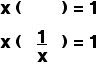 SUBSTITUTION:
In brief, if 2 terms are equal, then either one can be used for the other.
 EQUALITY:
These properties are the steps in equation solving that let you move things across the equal sign. Think -- whatever I do to one side of the equation, I have to do to the other.
ADDITIVE EQUALITY:
 MULTIPLICATIVE EQUALITY:
 Do you see a similarity between the equations shown in Substitution and those under Equality? Can you explain why?
--------------------------
Now, if you’re thinking that I just spent over an hour uploading this lesson for your benefit alone, you’d be mistaken. It’s not just students who should review previous knowledge before beginning the new semester. Teachers also look over previous work and review concepts, just to be sure we aren’t forgetting something. While a student may forget because of LACK of use, a teacher often forgets because of too much FAMILIARITY. It would be easy to overlook one of these properties, just because it’s always been there. It’s like forgetting to put a pencil in your backpack because there’s always been one there in the past, so you expect it to be there every time.
Just be happy that you’re not the teacher. While you are reviewing for only one class, your teacher is probably preparing for 2 or 3 or even 4 diverse courses!
*"Pavlov's Dogs" is a common reference to an experiment in the 1890’s by Ivan Pavlov in which he rang a bell immediately preceding offering food to the dogs in his study. The food made the dogs salivate. Eventually, just by ringing the bell, the dogs associated the sound with the upcoming food and began to salivate even when food was not offered. The reference to Pavlov suggests that a conditioned response can be elicited by repeated association of two unrelated things: in this case, multiplying a coefficient with each addend inside parentheses.
For students taking Algebra next semester, there is a good chance that properties will be tested within the first week or two of school. So, let’s review Properties and see how to think about them while working algebra problems.
COMMUTATIVE PROPERTY:
Think about the commuters on a train. They get on in various cities along the line, but they can get off in any order. The Commutative Property says that you can add or multiply in any order.
ASSOCIATIVE PROPERTY:Think about standing in line at a concert. You come with several friends and you’re chatting amiably when you notice a classmate 50 people behind you in line. You may NOT give that person skips in line (like the commutative property). But if the kid behind you says hello, it’s okay to turn around and talk with that person also. You can’t let an interloper in line, but you CAN associate with the people around you. This is the Associative Property which also says you can add or multiply in any order.
DISTRIBUTIVE PROPERTY:I like the expanded the title of this property: The distributive property of multiplication OVER addition and subtraction. It actually explains that the coefficient jumps OVER the parentheses and multiplies each of the addends or subtrahends before they are added or subtracted.
IDENTITIES:Identical twins are exactly the same. Identical terms are also exactly the same. There is a way to get exactly the same term in adding and multiplying.
ADDITIVE IDENTITY:
Think -- What would I add to a number to get exactly the same number back again? MULTIPLICATIVE IDENTITY:INVERSES:Using the Identities, we can also know the inverses intuitively.
ADDITIVE INVERSE:
In arithmetic, you called this the “opposite.” Think -- what would I add to a number to get the AdditiveIdentify of 0?
MULTIPLICATIVE INVERSE:
You might have previously called this the “reciprocal.” Think -- what would I multiply a number by to getthe Multiplicative Identify of 1?
SUBSTITUTION:In brief, if 2 terms are equal, then either one can be used for the other.
EQUALITY:These properties are the steps in equation solving that let you move things across the equal sign. Think -- whatever I do to one side of the equation, I have to do to the other.
ADDITIVE EQUALITY:
MULTIPLICATIVE EQUALITY:Do you see a similarity between the equations shown in Substitution and those under Equality? Can you explain why?--------------------------
Now, if you’re thinking that I just spent over an hour uploading this lesson for your benefit alone, you’d be mistaken. It’s not just students who should review previous knowledge before beginning the new semester. Teachers also look over previous work and review concepts, just to be sure we aren’t forgetting something. While a student may forget because of LACK of use, a teacher often forgets because of too much FAMILIARITY. It would be easy to overlook one of these properties, just because it’s always been there. It’s like forgetting to put a pencil in your backpack because there’s always been one there in the past, so you expect it to be there every time.
Just be happy that you’re not the teacher. While you are reviewing for only one class, your teacher is probably preparing for 2 or 3 or even 4 diverse courses!
*"Pavlov's Dogs" is a common reference to an experiment in the 1890’s by Ivan Pavlov in which he rang a bell immediately preceding offering food to the dogs in his study. The food made the dogs salivate. Eventually, just by ringing the bell, the dogs associated the sound with the upcoming food and began to salivate even when food was not offered. The reference to Pavlov suggests that a conditioned response can be elicited by repeated association of two unrelated things: in this case, multiplying a coefficient with each addend inside parentheses.
Saturday, July 17, 2010
PREPARING FOR THE NEXT LEVEL OF MATH: GEOMETRY
The good news about Geometry is that you’ve studied most of it before. The best news for a visual learner is that many of the theorems can be depicted through drawings. Of course the downside for some is the need for precision in this branch of math, but just a little attention to detail can make even this a minor hurdle easily scaled.
Let’s start with what you know:
AREA
 All of these are parallelograms: Length times width
A = LW
Take any parallelogram and draw a diagonal... and you have 2 identical triangles:
Area is 1/2 the area of the parallelogram
A = 1/2 LW

Here’s a circle.
Area = π (r) squared
PERIMETER

The simplest form for perimeter of a
parallelogram is: P = 2L + 2W (Can you apply the
distributive property to this?)
CIRCUMFERENCE
 Must be a circle: (2πr). Check out the similarity between area and circumference.
In high school Geometry, you'll also learn area of any polygon.
Pythagorean Theorem
 I've extolled the virtues of the Phythagorean Theorem in previous blogs. Know it and look for ways to use it in Geometry, Trigonometry, and Calculus.
Here are a few common knowledge items you will want to remember:
1. Sum of the interior angles:
3. Triangle Categories
(The shortest distance between two points is a straight line.)
5. Three points determine a plane.
(So does one line and another point........why?)
(So do two parallel lines..........................why?)
6. Vocabulary.......remember these?
"Given two parallel lines and a transversal, alternate interior angles are congruent." Eventually you'll be able to abbreviate this as AIA, but learn the whole rule first.
General tips for Geometry
Employ your artistic, creative side. Visualize or use the rhythm of music. Try drawing figures with your non-dominant hand. And DO draw the figures!
Let’s start with what you know:
AREA
All of these are parallelograms: Length times widthA = LW
Take any parallelogram and draw a diagonal...
and you have 2 identical triangles:Area is 1/2 the area of the parallelogram
A = 1/2 LW
Here’s a circle.
Area = π (r) squared
PERIMETER
The simplest form for perimeter of a
parallelogram is: P = 2L + 2W (Can you apply the
distributive property to this?)
CIRCUMFERENCE
Must be a circle: (2πr). Check out the similarity between area and circumference.In high school Geometry, you'll also learn area of any polygon.
Pythagorean Theorem
I've extolled the virtues of the Phythagorean Theorem in previous blogs. Know it and look for ways to use it in Geometry, Trigonometry, and Calculus.Here are a few common knowledge items you will want to remember:
1. Sum of the interior angles:
- triangle = 180
- parallelogram = 360
3. Triangle Categories
- equilateral - all sides equal
- equiangular - all angles equal
- isosceles - 2 sides equal (and 2 angles equal)
- scalene - no sides or angles equal
- obtuse - one angle bigger than 90 degrees
- acute - all angles smaller than 90 degrees
- right - one 90 degree angle
(The shortest distance between two points is a straight line.)
5. Three points determine a plane.
(So does one line and another point........why?)
(So do two parallel lines..........................why?)
6. Vocabulary.......remember these?
- skew
- parallel (Remember this from slope in Algebra?)
- perpendicular (This was mentioned with slope in Algebra too.)
- points, lines, planes
- intersection
- segment
- ray
- endpoint
- right angle
- acute angle
- obtuse angle
- complementary angles (Can you distinguish this "complementary" from "complimentary" elsewhere?)
- supplementary angles
- triangle, quadrilateral, pentagon, hexagon, septagon, octagon, nonagon, decagon, n-gon
- radius, diameter, tangent, secant, chord, arc (Relate these to the circle.)
- altitude of a triangle
- diagonal (in any polygon)
- similar
- congruent
"Given two parallel lines and a transversal, alternate interior angles are congruent." Eventually you'll be able to abbreviate this as AIA, but learn the whole rule first.
General tips for Geometry
Employ your artistic, creative side. Visualize or use the rhythm of music. Try drawing figures with your non-dominant hand. And DO draw the figures!
Subscribe to:
Posts (Atom)